
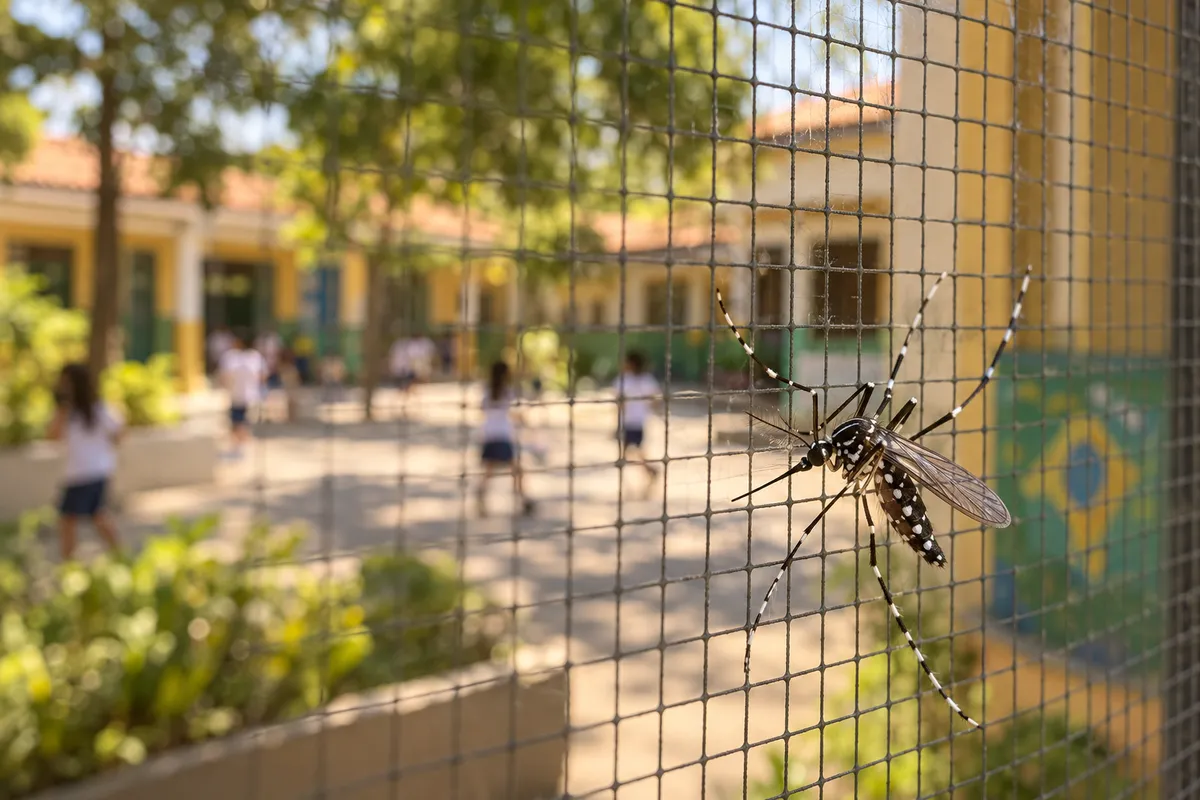
A school-based trial in Belo Horizonte, Brazil found that releasing mosquitoes infected with a bacterium called Wolbachia reduced dengue, Zika and chikungunya infections in children by 68.6%, according to a report from Medicalxpress. By the end of this article, you'll understand what that number means, how the approach works at a basic level, and what it does and doesn't change for your family.
What the trial found
The three diseases in question are all spread by the Aedes aegypti mosquito. Researchers released Wolbachia-infected (wMel) mosquitoes and tracked infections among children in a school-based trial. Medicalxpress reports that the intervention substantially reduced infections from all three arboviral diseases, with an overall reduction of 68.6%.
The study's authors argue that Wolbachia could be a sustainable, scalable tool for preventing mosquito-borne disease.
The 68.6% figure in plain language
A 68.6% reduction means that kids in the intervention setting had roughly two-thirds fewer of these infections than would otherwise be expected. It does not mean every child was protected, and it does not mean the diseases disappeared. Think of it as a big drop in risk, not a force field.
That distinction matters if you live somewhere dengue circulates. Even a strong community-level reduction leaves some risk, so everyday protection still has a place.
How "infecting mosquitoes" helps
The approach sounds odd: you release more mosquitoes, deliberately carrying a bacterium. The idea behind Wolbachia is that infected Aedes aegypti become less able to pass on these viruses. The mosquitoes become, in effect, disease blockers rather than disease carriers. Once these mosquitoes are established in an area, the protection can be self-sustaining, which is why researchers describe it as a potentially sustainable approach.
I'm keeping the mechanism simple here because that's what the available reporting supports. If you want the detailed biology, the full study is the place to look.
Why Brazil's situation raises the stakes
Brazil recently experienced its largest recorded dengue outbreak, part of a rising global dengue burden that researchers link to climate, urbanization and the spread of mosquitoes. Medicalxpress notes that public health systems urgently need options beyond insecticides and source reduction, the usual tools of spraying and removing standing water.
Those tools still matter. But they demand constant effort, and a complementary method that works in the background is appealing for any community.
Why a school-based trial matters to parents
Children are the group this study measured, and that's the part parents will care about most. Kids spend long stretches in schools and playgrounds, often during daytime hours when Aedes aegypti is active. Testing an intervention in a school setting speaks directly to where many children are exposed.
What you can do with this information
- If you live in or travel to a dengue-affected region: Keep using the protections your local health authority recommends. This trial is encouraging news, not a reason to drop other precautions.
- If your community is considering mosquito programs: Ask your local health department what methods they use and whether newer options like Wolbachia are under discussion.
- If you're elsewhere, including the U.S.: The reporting doesn't say whether or how this would work in other countries, so treat that as an open question rather than a promise.
- If your child has a fever after mosquito exposure in an affected area: Talk to a pediatrician. Dengue, Zika and chikungunya can look similar early on, and a clinician can guide next steps.
The bigger takeaway
Mosquito-borne illness is increasingly a family health issue, not just a tropical-medicine topic. A 68.6% drop in childhood infections is a strong signal that bio-control could add a meaningful layer to prevention.
Your next step: find out what your local health authority recommends for mosquito protection, and keep following it, even as promising tools like this one move from trial to practice.