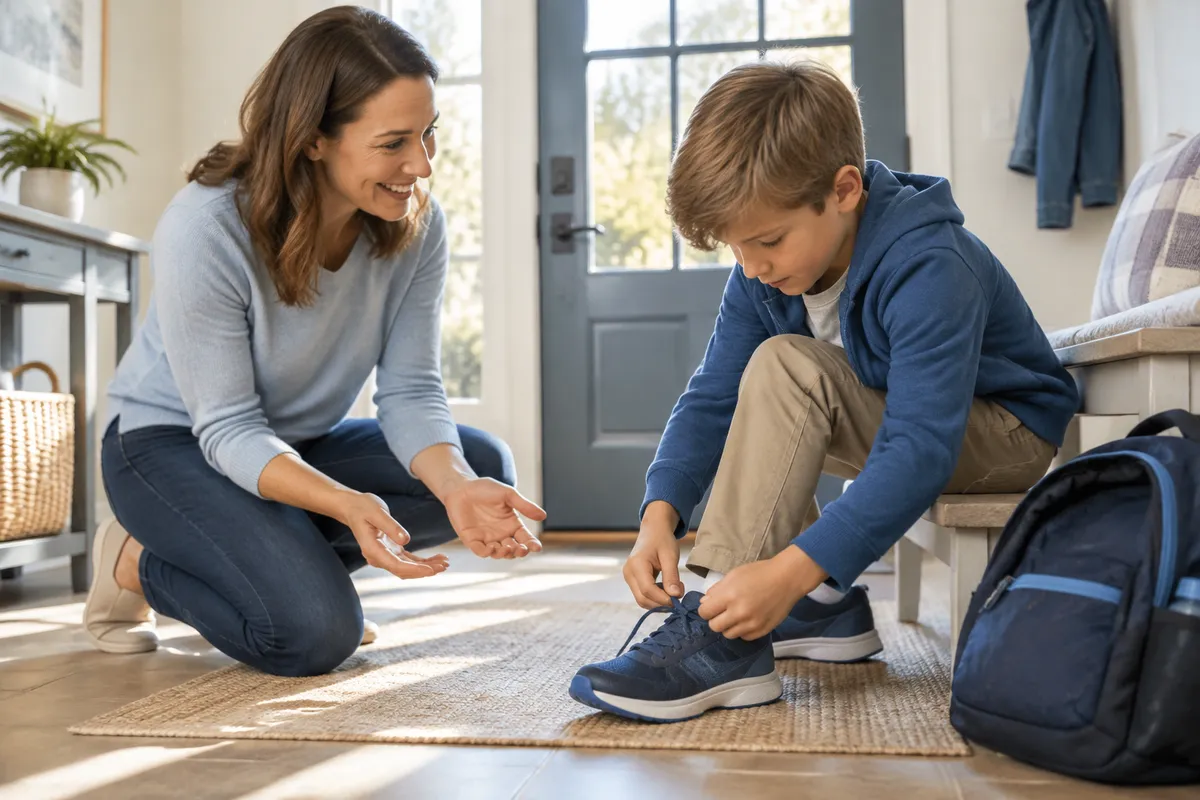
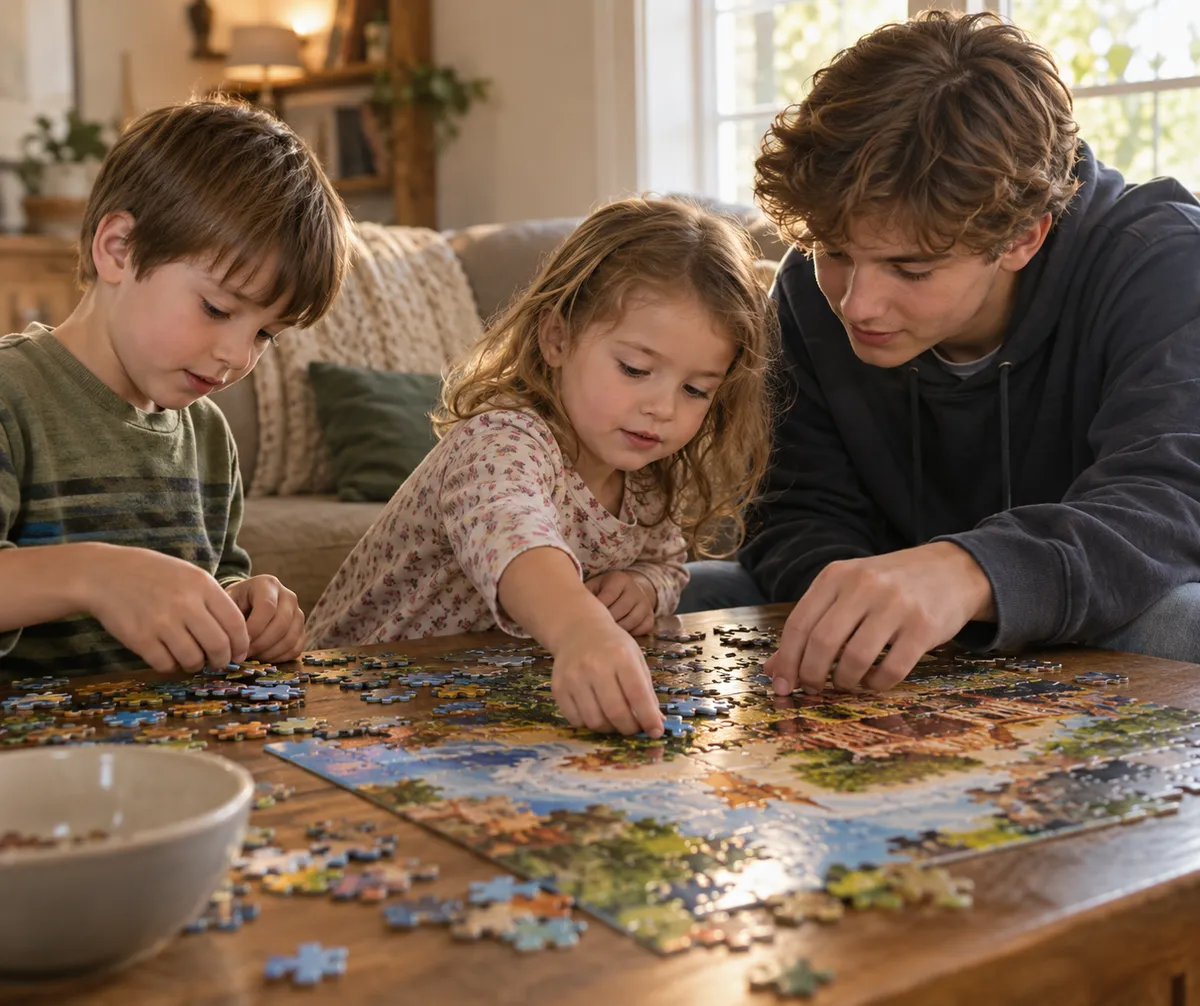
If your kids are spread across very different ages, you know the weekend math: the baby wants one thing, the first grader wants another, and everyone ends up in a different room. A piece from Cup of Jo, written by a mom of three small children in very different life stages, shares one piece of advice that offers a simpler way through. By the end of this article, you'll know what it is and how to build your own short list of activities that work for everyone.
The advice: "find the equalizers"
The advice comes from poet Kate Baer, as shared by the Cup of Jo author. Her phrase is "find the equalizers." An equalizer, as the piece describes it, is an activity that children of different ages can all enjoy together.
The key idea is that nobody has to be the "little one" or the "big one." Instead of adapting a big-kid activity down or a toddler activity up, you look for the things that sit comfortably in the overlap. The Cup of Jo author applies the idea to her own three kids and lists simple family activities that help everyone bond.
Why it works for busy families
The appeal is how low-pressure it is. This isn't an elaborate parenting system or a perfectly planned outing. It's a way of noticing what already works. That matters most during the times families struggle with: busy weekends, after-school hours, and general family downtime.
Here's my take on why it sticks: when an activity genuinely suits every age, you stop refereeing. Nobody is being bored, held back, or left out, so your energy goes toward being with your kids rather than managing them.
Seasonal equalizers to try
The Cup of Jo piece leans on simple, familiar activities. Here are ideas in that spirit, ones that tend to work across age gaps because they have a low skill floor and room to grow:
- Fall walks. A toddler can collect leaves while an older child spots the best ones. Everyone moves at their own pace.
- Baking. There's a job for every age: pouring, stirring, measuring, decorating.
- Movie time. One shared screen, one shared blanket pile, one thing to talk about afterward.
- Backyard hunts. Hide objects or look for natural treasures. Younger kids find the easy ones, older kids go for the tricky ones.
These are starting points. Your own equalizers may look completely different, and that's the point.
How to find your family's equalizers
You don't need a formal process, but a little noticing helps.
Watch for the moments when everyone is quiet and happy
Think back over the last few weeks. When did all your kids end up in the same space without any nudging? Write down what was happening. That's likely an equalizer.
Look for activities with built-in roles
The best shared activities give each child a different way in. Baking is a good example: one child can crack eggs while another measures flour. Nobody needs the same skills to participate.
Keep the bar low
An equalizer doesn't have to be an event. If it takes forty minutes of setup, it will rarely happen. The ones that stick are things you can start on a whim.
Match them to your calendar
Sort your list by the situations where you need it most: a rainy Saturday, the hour after school, a quiet Sunday afternoon. Having two or three ready for each means you aren't inventing something while tempers rise.
What if nothing fits everyone?
Sometimes one activity just won't land for all your kids, and that's normal. Nothing in the advice says every moment needs to be shared. Equalizers are meant to be a handful of reliable options alongside the separate time each child also needs, not a replacement for it. If an activity works for two of three kids, it's still worth keeping on the list for another day.
Ask your own family
One useful move is to ask your kids directly what they like doing together. Their answers may surprise you, and children tend to cooperate more with plans they helped pick. If you have friends with multiple kids, trading lists is another easy way to collect ideas.
Your next step
This week, pick one moment when your kids are all home together and try a single equalizer: a walk, a batch of cookies, a movie. Notice how it goes, and add it to your list if it worked.