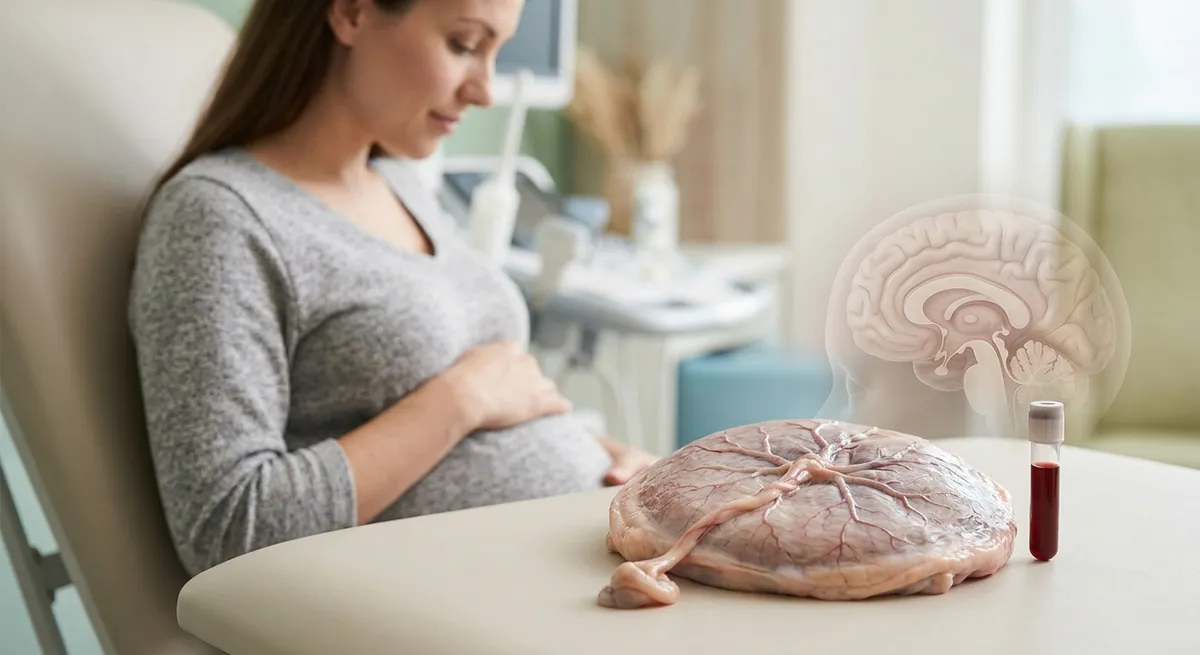
If you're expecting a C-section, you may soon hear about ketamine and postpartum mood. Here's how to read the headlines: a new look at the research suggests promise, but it doesn't yet show that ketamine prevents postpartum depression. By the end of this article, you'll know what the findings show, what they leave open, and which questions to bring to your care team.
What the review found
Per Today's Parent, a review of six trials found that ketamine given during C-sections may be linked to lower postpartum depression symptom scores in the first two weeks after birth.
That's the core finding, and it's a narrow one. It concerns symptom scores, which are measurements of how people report feeling, and it concerns a short window right after delivery.
Early relief is not the same as prevention
This is the distinction that matters most, and the one headlines tend to blur.
- Lower symptom scores early on means people who received ketamine tended to score better on depression measures in the first two weeks.
- Preventing postpartum depression would mean fewer people go on to develop the condition over the longer run.
Per the report, it's still too soon to know whether ketamine does the second thing. A boost in the first couple of weeks could fade, or it could matter a great deal. The current evidence can't tell us which.
Think of it like a sore throat remedy that makes you feel better on day one. That's nice, but it doesn't tell you whether you avoided getting sick, or how you'll feel on day thirty.
Why researchers are looking at C-sections
The C-section setting makes practical sense for study. Anesthesia care is already underway, and a medical team is closely monitoring the patient. That offers a defined moment to test an intervention. Researchers are also looking for faster-acting options for people at risk of depression after birth, and postpartum mental health is a growing focus in maternal care.
Ketamine's expanding role in treating depression more broadly is part of why this research is getting attention now. The source material doesn't detail how the trials were designed, so we can't say more about doses or patient selection here.
What this means if you're pregnant
Nothing in this research suggests you should request ketamine, or that you're missing out if you don't get it. It's an early signal that scientists are following up on, not a standard of care.
What it can do is prompt a useful conversation about your mental health plan around birth.
Questions worth asking your doctor
- Do I have risk factors for postpartum depression? Your history and current mood shape what support makes sense.
- Is any new treatment being offered or studied at this hospital? If so, ask what the evidence actually shows and what remains unknown.
- What's the plan if I feel low after birth? Ask who to call, and how quickly you can be seen.
- What does my anesthesia plan involve? If you're having a C-section, it's reasonable to understand what you'll receive and why.
- How will you check in on my mood in the first weeks? Early follow-up matters whatever treatment you receive.
Keeping the hype in check
Ketamine gets a lot of attention, which can make early findings sound bigger than they are. A fair summary: six trials, a short window, lower symptom scores, and an open question about whether any of it prevents the condition.
Partners and family can help here too. If someone you love is heading into a C-section, the most useful support doesn't depend on any drug. Ask how they're feeling, watch for changes over the first weeks, and make it easy for them to tell a doctor if something feels off.
The takeaway
Before your delivery, ask your care team how your mood will be monitored afterward, and write down who you'll call if you start to struggle. That plan will help you no matter what the ketamine research eventually shows.