
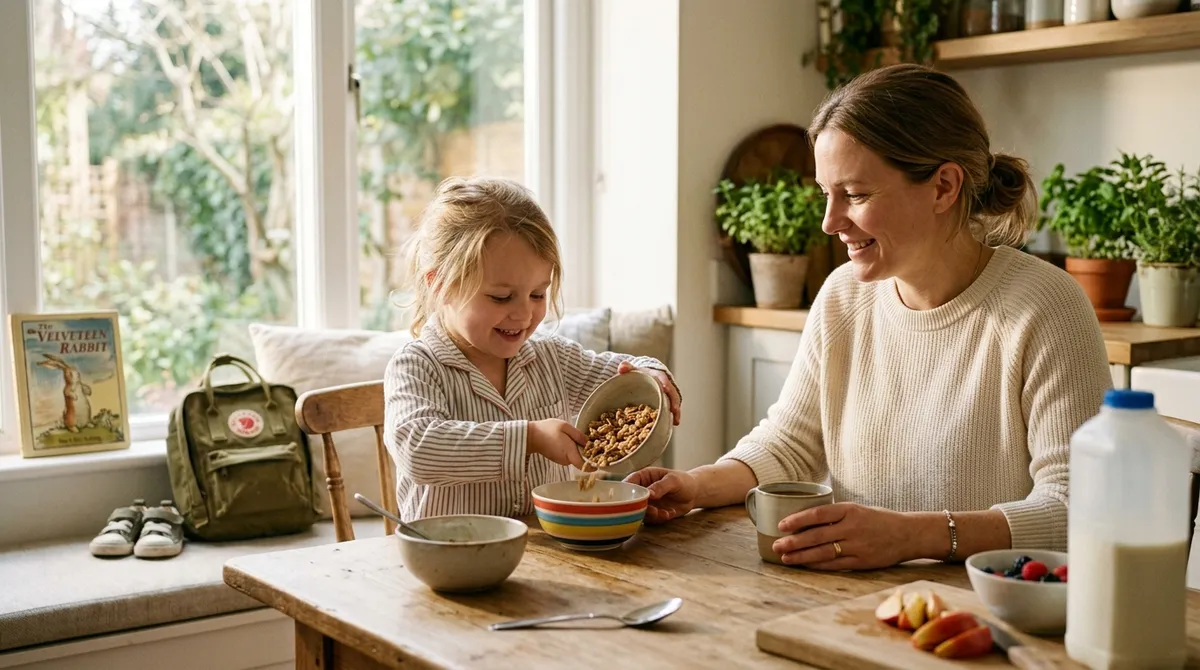
Confidence isn't something children either have or don't have. It builds — or erodes — in small, repeatable moments every single day. The way you respond when your kid struggles with a puzzle, whether bedtime is predictable or chaotic, even what's on their plate: all of it contributes to how capable and secure your child feels in the world.
Research backs this up, and the findings are genuinely encouraging for parents. You don't need a special program or a personality overhaul. You need consistent, warm, everyday habits. Here are five science-backed practices that build lasting confidence in children — and what each one looks like in real life.
1. Lead with Warmth, Not Pressure
Children feel more secure, capable, and resilient when home is predictable and emotionally steady. That's the throughline in child development research — and it starts with how you show up, not what you achieve together.
Warmth means your child knows they won't be dismissed when they share something hard. It means you stay regulated when they're dysregulated, so they can borrow your calm. Pressure, even well-intentioned pressure, communicates that love or acceptance is conditional on performance — and that quietly chips away at confidence over time.
In practice: when your child comes home upset about a bad grade, lead with curiosity before solutions. "Tell me what happened" beats "You need to study more" every time, especially if you want them to keep coming to you.
2. Praise the Process, Not the Label
Telling a child they're "so smart" or "so talented" feels kind, but research on praise suggests it can actually backfire. Kids who are labeled tend to avoid challenges that might disprove the label. They play it safe because there's a reputation to protect.
Process praise flips that dynamic. Instead of praising what a child is, you praise what they did — the effort, the strategy, the persistence.
Swap these:
- "You're so smart" → "You stuck with that even when it got hard — that's what made the difference."
- "You're a natural" → "I noticed you tried a different approach when the first one didn't work."
- "Great job!" → "You practiced that three times and it paid off."
The message shifts from you have a fixed gift to your actions produce results — which is exactly the belief confident kids carry into new challenges.
3. Let Children Make Real Choices
Autonomy and confidence are closely linked. When children make genuine decisions — even small ones — they build a sense of agency: the belief that what they do matters.
The key word is real. Fake choices ("Do you want to clean your room now or in five minutes?") don't count, and kids can tell. Real choices have stakes and are actually honored: what to pack for lunch, which book to read first, how to arrange their bedroom.
You can preserve structure and still give meaningful autonomy. The goal isn't to hand over control of the household — it's to carve out areas where your child genuinely leads. Over time, that practice of deciding, acting, and seeing outcomes is what builds the internal sense of "I can handle things."
Start small: three genuine choices a day, honored without second-guessing, adds up fast.
4. Protect Routines, Sleep, and Movement
This one often gets underestimated because it doesn't feel like "parenting" in the active sense. But a predictable daily routine is one of the most powerful confidence-builders available to you — because it makes a child's world legible and safe.
When kids know what to expect, their nervous systems don't have to stay on alert. That frees up cognitive and emotional resources for learning, risk-taking, and connection — all the things that grow confidence.
Sleep matters enormously here. A child who is consistently under-slept is operating with compromised mood, attention, and self-regulation. These aren't character flaws; they're physiological states. Protecting sleep protects the child's ability to show up as their best self.
Movement belongs in this category too. Physical activity supports mood regulation, reduces anxiety, and gives children direct, embodied feedback that their bodies are capable. Even unstructured outdoor play counts — maybe especially that.
Practically: consistent wake and sleep times, some outdoor movement built into most days, and a predictable after-school rhythm. None of this has to be rigid — it just needs to be dependable.
5. Feed the Body Well, and the Mind Follows
Nutrition is rarely the first thing parents think of when they consider confidence-building, but the connection is real. What children eat shapes their energy, their mood, and their capacity for the self-regulation that underpins confident behavior.
A child who's hungry, spiking on sugar, or chronically low on nutrients isn't in a state to learn well, manage frustration, or bounce back from setbacks. These aren't attitude problems — they're biology.
This doesn't mean overhauling everything or creating anxiety around food, which has its own costs. It means thinking of consistent, balanced meals as part of the same infrastructure as sleep and routines: the foundation that everything else rests on.
Regular meal times, protein and fiber at breakfast, and reducing the peaks and crashes of highly processed snacks are practical starting points. The goal is a child whose body isn't working against their brain.
The Bigger Picture
Notice what these five practices have in common: none of them are about telling your child they're wonderful. Confidence doesn't come from hearing that you're great — it comes from accumulating evidence that you can try things, survive mistakes, make decisions, and be genuinely known by the people who matter most to you.
You build that evidence in the everyday moments. The consistent bedtime. The praise that names the effort. The choice that was actually honored. The meal that steadied the afternoon.
Pick one of these five and make it deliberate for the next two weeks. That single shift, practiced consistently, will do more for your child's confidence than any pep talk.