TL;DR
You can foster your child's math skills right at home! Simple kitchen table activities like cooking and building can turn your family time into playful, effective learning experiences.
The Surprising Math in Your Everyday Life
For many of us, math seems confined to the classroom—think blackboards, textbooks, and formal tests. But recent research has shown that some of the most meaningful math lessons for children happen right at home, often through everyday activities that many parents don’t even recognize as math. Imagine your children learning about engineering concepts while engaged in simple kitchen activities or projects around the house! This enlightening study by Amber Simpson challenges the conventional notion of math learning, suggesting that we should reframe our understanding of where and how children acquire important STEM skills.
Redefining Math Learning
Home as a Learning Environment
Gone are the days when parents need to feel overwhelmed by the idea that children can't excel in math unless they're pouring over worksheets or taking formal classes. The kitchen, living room, or even the backyard can serve as creative laboratories for your child to explore mathematical concepts naturally. By encouraging open-ended tasks that utilize everyday materials, parents can help facilitate meaningful math experiences that resonate with their children’s lives.
Everyday Activities that Teach Math
So, how do you allow your kid to explore math without the pressure of traditional learning? Here are several fun activities that can be implemented at the kitchen table and beyond:
1. Cooking and Baking
When kids help in the kitchen, they intuitively begin to understand measurements, ratios, and even timing. Following a recipe requires basic math skills like adding, subtracting, and measuring quantities. You could even take it a step further by discussing fractions when dividing a pizza or doubling a recipe together. This not only teaches math but also instills a sense of accomplishment.
2. Building Towers
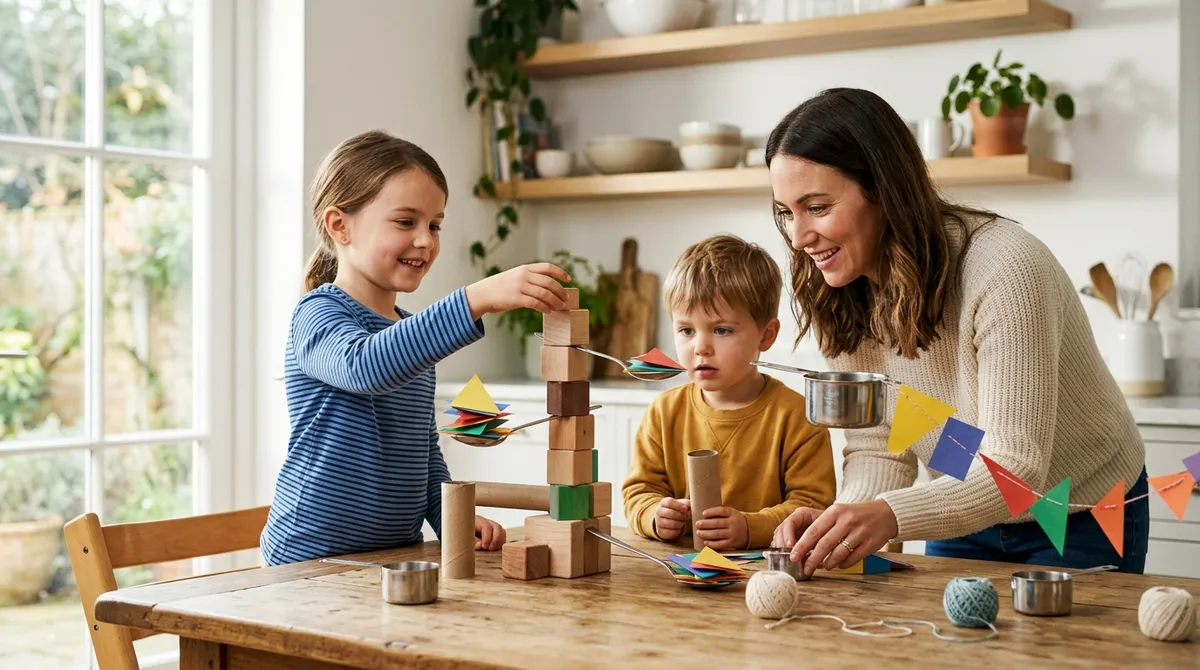
Using building blocks, Legos, or even recyclable materials, challenge your child to create towers or structures. This can introduce concepts such as balance, gravity, and geometry. Siblings can become partners in math discovery, as they work together to create the tallest tower or the sturdiest bridge.
3. Shopping as a Math Exercise
Turn a shopping trip into a math lesson! Whether at the grocery store or online, ask your child to compare prices, calculate discounts, or identify quantities. This real-world application develops critical thinking and problem-solving skills, equipping them with practical math understanding.
4. Gardening and Nature
If you have a garden or a patch of land, involve your kids in planning, planting, and measuring growth. They can count seeds, measure distances between plants, or even manage the water supply. Discussing growth rates and plant sizes makes nature a living math classroom.
The Power of Play
A significant benefit of integrating math into daily life is that it doesn’t have to feel like a chore; it can be quite the opposite! By framing these activities as fun, playful experiences, you’ll encourage a growth mindset in your children—especially important for developing resilient learners. Even parents who may not consider themselves “math people” can support their kids’ learning through these engaging interactions.
Siblings as STEM Partners
Don’t underestimate the power of sibling collaboration! Children often learn effectively from each other. When siblings work together on math-related projects, both can benefit from shared ideas, supportive guidance, and, most importantly, fun! Whether they’re building a fort or conducting a silly experiment, they are honing their math skills in an enjoyable manner.
Conclusion: Embrace the Math Moments
As parents, recognizing math in everyday situations can illuminate how much you’re already doing to support your child’s learning. By engaging in activities that blend fun and math, you help cultivate their skills without the stress associated with traditional learning paths. So the next time your kids are in the kitchen or playing at the table, take a moment to appreciate how these playful moments are contributing to their math education—one recipe, tower, or shopping trip at a time!