
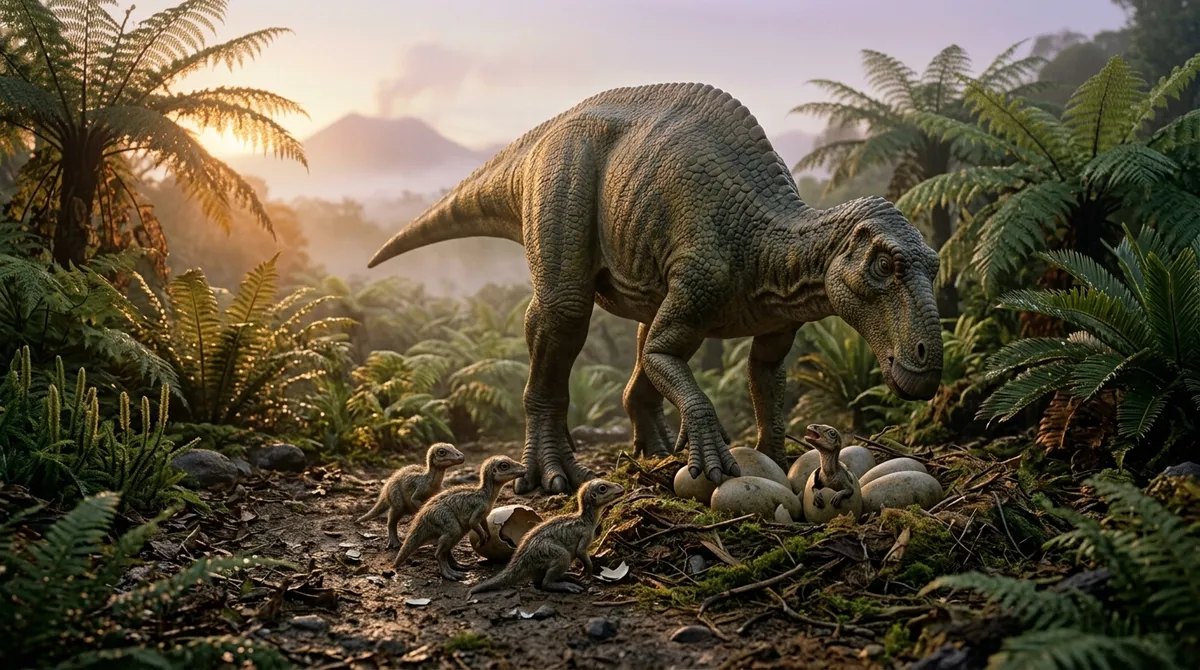
The fascinating world of dinosaurs continues to captivate scientists and enthusiasts alike. Among the many questions surrounding these prehistoric creatures is their parenting behavior. Were dinosaurs attentive parents, or did they leave their young to fend for themselves? Recent discoveries and studies shed light on the nurturing habits of these ancient giants.
Discovering Dinosaur Nests
One of the most compelling pieces of evidence about dinosaur parenting comes from the discovery of fossilized nests. These nests, found in various locations around the globe, provide valuable insights. The presence of meticulously arranged eggs suggests that some species, like the Maiasaura, may have exhibited significant parental care. This dinosaur's name, meaning "good mother lizard," reflects the belief that it tended to its eggs and young.
Parental Care Patterns
Evidence of dinosaur parenting is not uniform across all species. Some dinosaurs, particularly those belonging to the Theropod group, appear to have shown more parental involvement than others. For instance, certain fossils reveal that adult dinosaurs might have guarded their nests against predators and environmental threats. Additionally, the proximity of adult and juvenile dinosaur fossils in some findings suggests that young hatchlings stayed with their parents for a period after birth.
Comparisons with Modern Animals
To understand dinosaur parenting behaviors, researchers often compare them with modern-day animals. Birds, the closest living relatives of dinosaurs, exhibit a wide range of parenting styles. Some birds are highly attentive, while others are more hands-off. This diversity among birds highlights the possibility that dinosaurs too had varied approaches to raising their young.
Social Structures and Community Care
Dinosaurs are believed to have lived in complex social structures. Some species likely formed herds, which could have facilitated communal care among group members. This social behavior suggests that dinosaurs might have relied on collective efforts to protect and raise their offspring, similar to some modern-day mammals.
Challenges and Survival
Despite potential parental care, young dinosaurs faced numerous challenges. Predation, harsh environmental conditions, and scarce resources would have posed significant threats. Parental care might have played a crucial role in increasing the survival rates of hatchlings, allowing them to grow and thrive in a competitive ecosystem.
Fossil Evidence and Scientific Interpretations
While fossil evidence provides clues, interpreting these signs is complex. Scientists rely on various techniques, including the study of bone microstructures and nesting sites, to reconstruct dinosaur behavior. Each new discovery adds a piece to the puzzle, helping paleontologists understand the diverse life strategies of these ancient creatures.
Continuing Research
Research into dinosaur parenting is ongoing, with new technologies and discoveries continually reshaping our understanding. As more fossils are unearthed and analyzed, scientists hope to uncover further details about how these magnificent creatures cared for their young.
In conclusion, while clear evidence of dinosaur parenting behavior varies among species, there is compelling support for the idea that some dinosaurs engaged in nurturing their young. Fossilized nests, social structures, and modern animal behavior comparisons all contribute to this understanding. As our knowledge of the Mesozoic era deepens, the picture of dinosaur life becomes ever more vibrant and complex.